

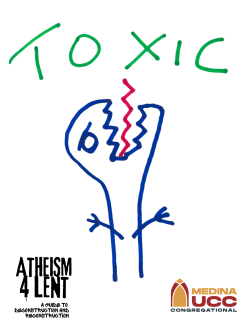
Toxic
March 23, 2026
There’s a moment that happens in parenting… Maybe you’ve had it. You’re in a crowded place. Voices everywhere. Kids calling, adults talking, noise bouncing off every surface. And then, through all of it, you hear your child’s voice. Not because it’s the loudest. But because it’s theirs.
I swear I can hear Sam and Eve call “Papa” a quarter mile away, more so when they were little. I’m sure you have this, too. You know it instantly. And if something’s wrong, you feel it before you even see it. That instinct. That recognition. That bond. That’s the image Jesus reaches for when he says, in the Gospel of John: “My sheep hear my voice. I know them, and they follow me.”
But before we get to that voice, we have to sit for a moment in a harder truth. Because in Ezekiel, God is angry. Not mildly disappointed. Not offering gentle correction. God says, “I am against the shepherds.”
And the reason is devastatingly clear. The people who were supposed to care for others were using them instead. They were feeding themselves instead of the flock. They were ignoring the injured. They were letting the vulnerable wander off and calling it someone else’s problem. They had turned a role of care into a system of control.
And if we’re honest, that’s not just an ancient problem. A lot of people have been hurt by church. Not just bored. Not just disconnected. Hurt. By leaders who demanded too much. Leaders who abused. Leadership that covered up that abuse. Communities that excluded instead of embraced. By teachings that made them feel small, ashamed, or afraid. And sometimes the harm is subtle.
It sounds like: “You should be doing more.”
“If your faith were stronger…” or “If you read your bible more…”
“This is just how it is, no sense in complaining.”
It looks like helplessness being called faithfulness. Silence being called peace. Control being called order. And over time, something begins to shift inside a person. Faith stops feeling like good news and starts feeling heavy. Shame and guilt are the most associated feelings of toxic communities of faith. Like something you have to carry carefully so it doesn’t break.
If that’s ever been your experience, or if that’s something you’re trying to protect your kids from then hear this clearly: God is not neutral about that kind of harm.
“I am against the shepherds,” God says.
Not against the people who were hurt. Not against the ones who walked away. Against the systems and the leaders that caused the damage. The harshest words Jesus has to say to anyone, any mention of hell or condemnation is toward the religious who already had their minds made up on who God loved and who God didn’t.
I heard it somewhere that Christianity is about helping others and controlling yourself. When it becomes about controlling others and helping yourself, it’s no longer Christianity. That’s where Jesus always is. He steps right in between the religious certain wielding their toxic faith. Jesus steps in. Right into that history. Right into that pain. And he says: “I am the good shepherd.”
Not just a better leader. Not just a kinder version of the same system. Something entirely different. Because Jesus starts describing what that means. It doesn’t sound like control. It sounds like relationship. “The sheep hear my voice.”
Not “they obey out of fear.”
Not “they stay because they have no choice.”
Not “turn or burn!’
They recognize something. And that raises a really important question for us, especially in a season like Lent: What voices have we learned to trust?
Because the truth is, we all carry voices inside us. Voices from our upbringing. Voices from culture. Voices from church. Some of them sound like guidance. But they don’t lead to life. Some of them sound like authority. But they don’t actually care for us. And over time, it can get hard to tell the difference.
Here’s a simple way to begin sorting it out: The voice of the Good Shepherd does not harm you. It does not shame you into belonging. It does not threaten you into obedience. It does not make you feel like you are always one step away from being cast out. The voice of Jesus calls you by name, and it sounds like love.
And then Jesus says something even more striking. He says, “The good shepherd lays down his life for the sheep.”
That’s the difference. Bad shepherds take. They consume time, energy, loyalty, identity. The Good Shepherd gives. Freely. Open-handed. Without trying to control the outcome.
So if you’re ever wondering what kind of faith you’re being invited into or what kind of church you want for yourself, for your family, for your kids, and all those who come after us when our time is done, for we’re all future-dead people… Here’s a question to hold onto: Is this drawing me deeper into love or deeper into fear?
There are shepherds out there who differ and both use religious language. But they do not lead to the same place.
Lent is a season where we tell the truth. Not just about our personal struggles but about the ways we’ve been shaped by things that were never life-giving. And maybe this Lent, isn’t about giving something up like chocolate or coffee. We’re setting our sights a little higher. This Lent has been about letting go of a voice. A voice that told you, you weren’t enough. A voice that made faith feel exhausting. A voice that kept you anxious instead of grounded. We have been learning to listen again. Because the Good Shepherd is still speaking.
Not louder than everything else. But clearer. Steadier. More like that voice in a crowded room that you somehow recognize right away.
Rob Bell calls this the “bass note of God’s love.” It’s under all the noise and treble of the world. All the chaos ringing out, listen for the bass notes of God’s love.
You know this steady voice when you hear it. It doesn’t make your shoulders tense. The one that doesn’t make you feel small. The one that makes you feel known because you already know it. And maybe that’s where faith begins again. Not with pressure. Not with performance. But with recognition.
A voice that says:
You are not a burden.
You are not a problem to solve.
You are not someone I have to control.
You are mine.
You are loved.
And I will not use you.
And when that voice starts to sound familiar, you follow it. Not because you have to. But because something in you knows, it’s finally safe to trust.
Leave a Reply